
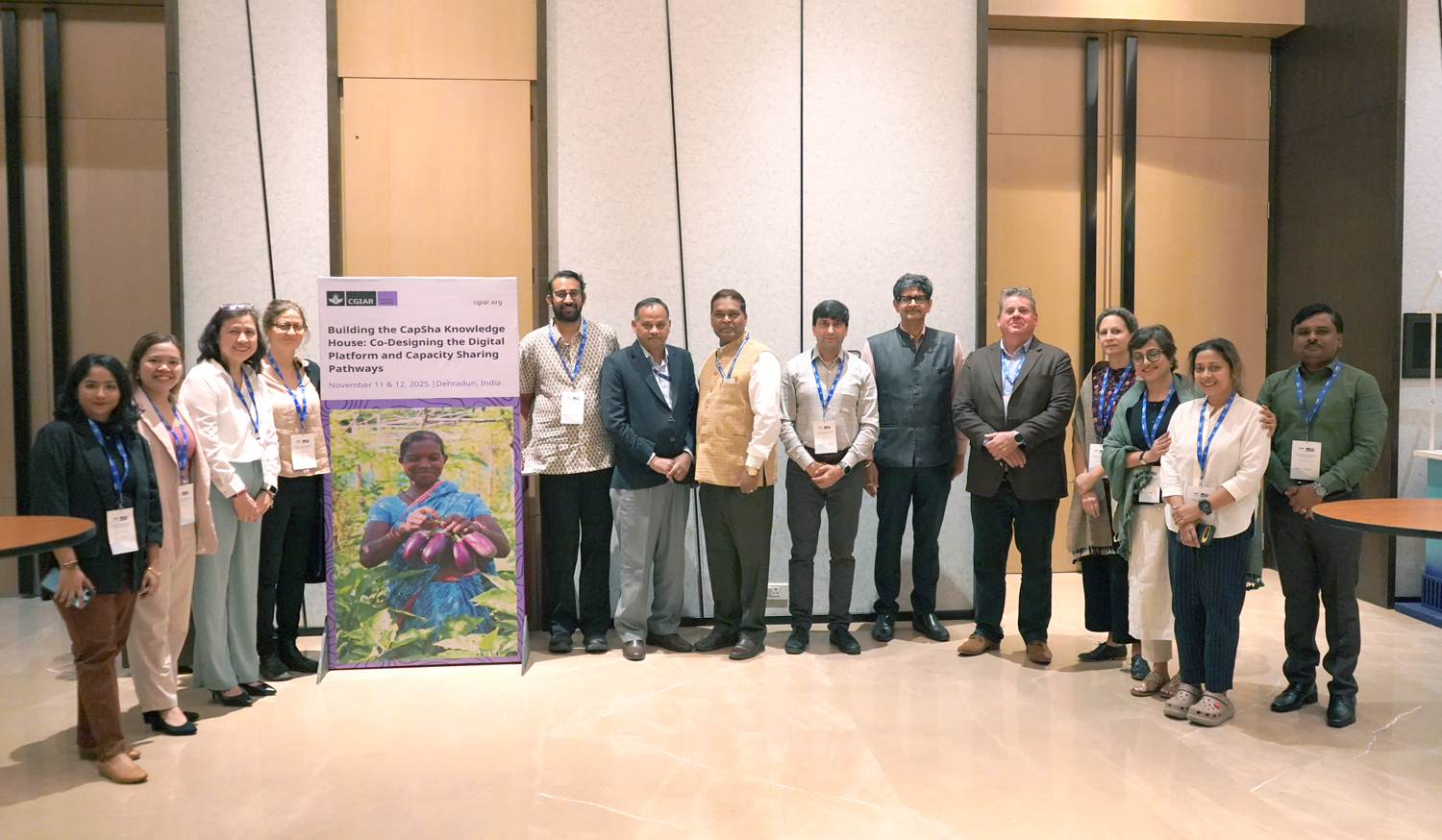
CGIAR partners align on CapSha’s role as an enabling force for systemwide capacity sharing.
Dehradun, India, 11–12 November 2025 — The first co-design workshop of CGIAR partners on the CapSha Knowledge House was held over two days in Dehradun. The workshop, convened under the Capacity Sharing Accelerator (CapSha) Area of Work 2, brought together more than 30 representatives from CGIAR centers and partner institutions in a hybrid format to test the design features and strategic direction of CapSha’s emerging digital marketplace.
The AoW2 team introduced its first prototype and designed the workshop as an exploratory and decision-shaping exercise to engage participants directly, through group discussions, breakout and plenary sessions, with unresolved design choices, including platform functionalities, key features, and how to manage overwhelming volumes of existing CGIAR materials, and who the platform is ultimately intended to serve. Thus marked a turning point in how capacity sharing will be coordinated, accessed, and scaled across the CGIAR system.
“The true measure of capacity development lies in its ability to transform knowledge into practice and impact at the grassroots level,” said Dr. M. Madhu, Director of ICAR–IISWC, setting the tone early in the workshop.
The discussions were grounded in a shared reminder that capacity sharing must ultimately translate into real-world change. This perspective reinforced the need for CapSha to move beyond abstract learning and ensure that knowledge circulating through the system remains actionable, context-specific, and usable by institutions working closest to communities.
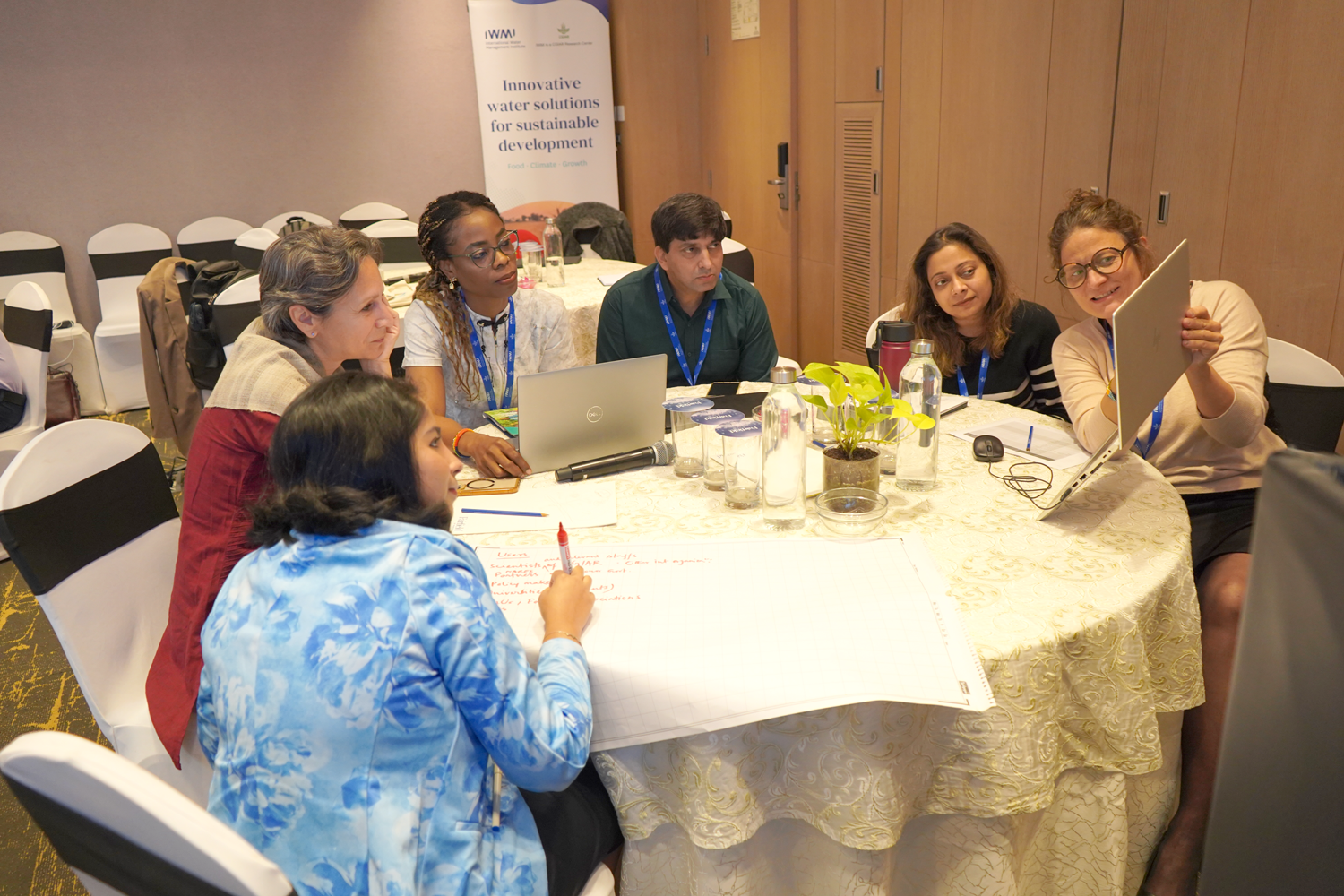
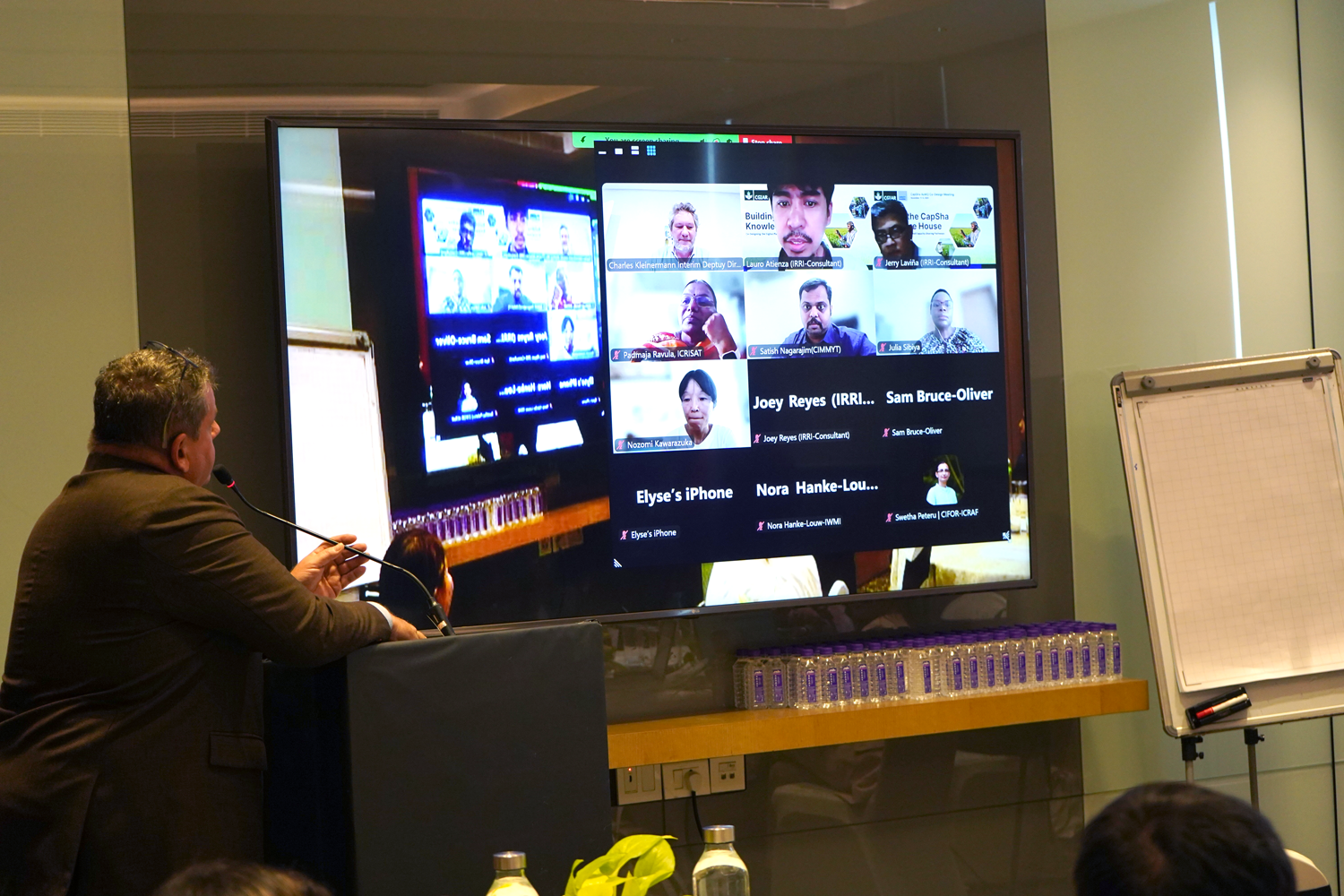
Building on this foundation, participants consistently emphasized that CapSha’s role is not to deliver training itself, but to strengthen the systems that already do.
“CapSha is not about delivering capacity directly. It is about enabling systems and strengthening the institutions that are closer to end-users,” noted Nora Hanke-Louw of IWMI.
This framing directly shaped key design decisions, including the agreement that the Knowledge House should prioritize CGIAR programs, centers, and NARIS as its primary users, while supporting “train-the-trainer” models that extend impact through established national and regional partners.
Participants mentioned that CapSha can be more than a centralized repository that ingests all CGIAR content. They firmly defined it as a neutral aggregator that links to existing center platforms, learning management systems, and partner repositories. The workshop also challenged long-standing supply-driven approaches to capacity development.
“Capacity development fails when it begins with what institutions want to offer, rather than what users actually need,” highlighted by Dr. Alok Sikka of IWMI.
In response, Anilyn Maningas, CapSha AoW2 Co-lead, underscored the platform’s intended role. She said that CapSha should be understood as an enabling and amplifying force, not a replacement for existing capacity development efforts.
Together, these perspectives reinforced a shared conclusion from the co-design process: the Knowledge House must be demand-led, neutral, and focused on coordination and discoverability, enabling CGIAR and its partners to work more effectively through existing systems rather than around them. The co-design sessions also highlighted the importance of robust governance, content curation, and a Community of Practice to support peer learning and coordination.
By the close of the workshop, the group had moved from broad principles to concrete next steps. These include revising product submission surveys, populating the platform with initial expert profiles and resources, establishing advisory mechanisms, and continuing collaboration through the online community forum inside the CapSha Knowledge House.