
With insights from IWMI, this piece examines how capacity sharing is taking shape across CGIAR, and where stronger systems could help make that work more coherent.
The International Water Management Institute (IWMI) is not struggling to implement capacity development activities.
Across its work on solar irrigation, groundwater management, water accounting, policy engagement, and long-term collaboration with national agricultural research and extension systems, capacity sharing is already embedded in the way IWMI works. It takes many forms: training, peer learning, co-creation with partners, institutional collaboration, policy support, tools and knowledge products.
The challenge is that much of this work is often unevenly documented and measured.
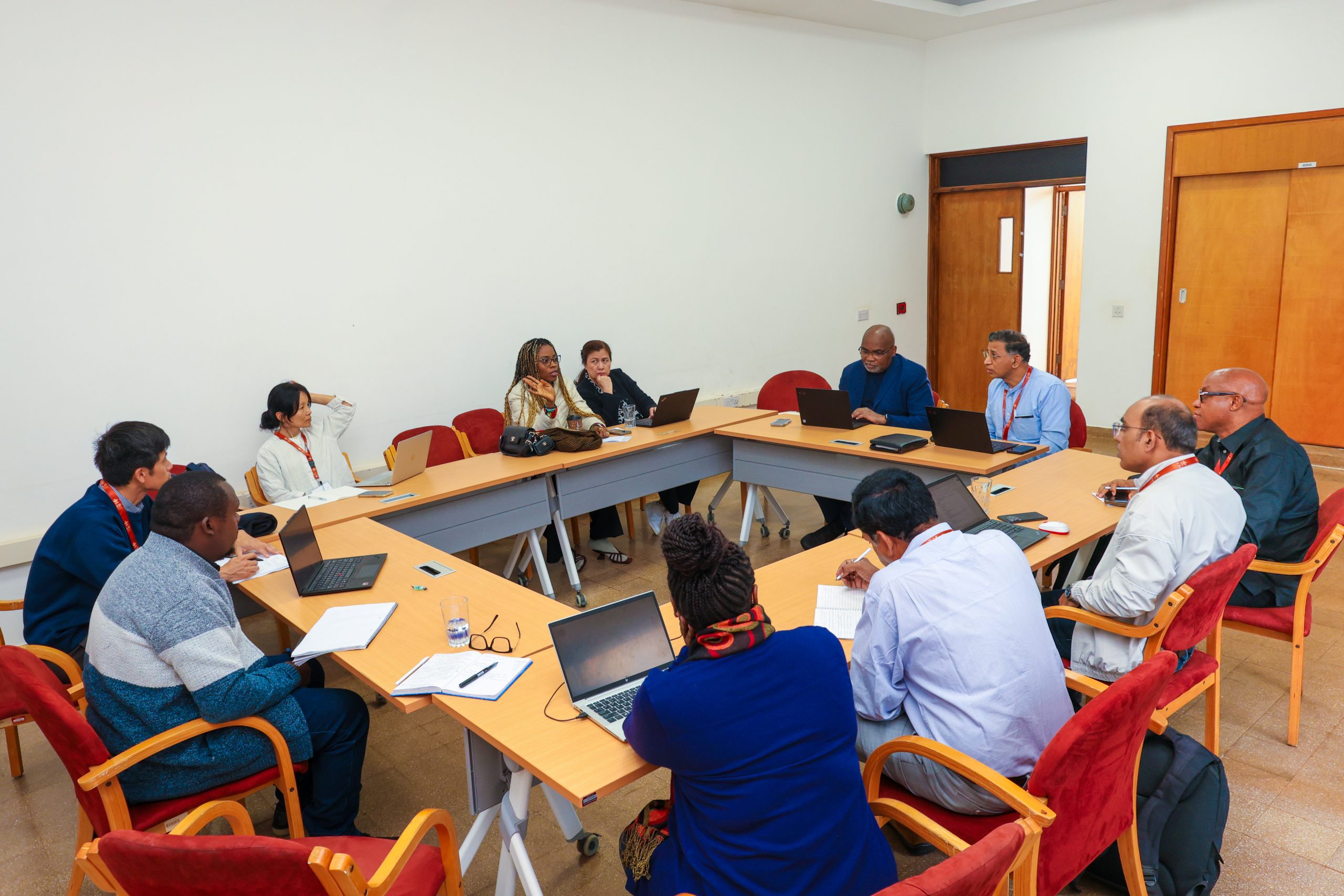
That was the central insight from an internal review and a recent dialogue between IWMI and the CGIAR Capacity Sharing Accelerator (CapSha). The discussion pointed to a need for greater coherence, improved learning systems, and clearer evidence of how capacity sharing contributes to long-term impact. It also reflects a broader challenge across the CGIAR, where capacity development is widespread, but its cumulative contribution to long-term change often remains difficult to track.
The coherence gap
For IWMI, as for many CGIAR centers, capacity development is already a core pathway to impact. Many projects are designed around demand-driven engagement, strong partnerships with national and regional actors, and practical support for institutions working on water, agriculture, and climate-resilience challenges. These are “good practices.”
However, the dialogue highlighted an important limitation. While these practices are widely implemented, they are not consistently articulated as part of a shared institutional strategy. Documentation is uneven and not easily accessible, learning is not systematically captured, and reporting often relies on simple output indicators, such as the number of participants trained. These metrics provide only a partial picture of impact, offering little insight into behavioral change, institutional uptake, or policy influence. As a result, there is growing perception that the challenge is not the absence of capacity development, but the absence of a structured approach that connects measurements and helps scale it.
Demand signals and constraints.
The discussion surfaced several practical questions that revealed real operational challenges.
- How to define and measure “success”. As one participant reflected, reporting that “ten people were trained” does not necessarily indicate whether decisions improved, practices changed, or institutions adapted. This gap raises a broader question: how can capacity sharing outcomes be captured in ways that are meaningful, comparable, and useful for learning?
- Visibility and learning: IWMI staff noted that many effective practices, such as co-design with partners, long-term engagement with government institutions, and peer-to-peer learning, are not systematically documented or shared across projects. This creates a risk of fragmentation, where valuable experience remains localized and cannot easily inform broader institutional or system-level learning.
- Alignment: While capacity development is embedded in project-level theories of change, it is not consistently framed as a shared institutional pathway. This raises practical questions about how individual efforts contribute to collective outcomes, and how priorities should be defined and unified across teams, regions, and thematic areas.
Together, these signals reveal a clear demand: not for more capacity development activities, but for greater coherence, visibility, and stronger learning systems.
CapSha’s value-add to IWMI’s work
The relevance of CapSha becomes particularly clear when viewed through these challenges.
- First, the need to move beyond output-based indicators highlights the importance of CapSha’s evidence and innovation work. By generating and testing approaches to assess behavioral and institutional change, CapSha can support IWMI in strengthening its monitoring, evaluation, and learning systems.
- Second, the challenge of fragmented documentation points to the role of the CapSha Marketplace. By creating a space where tools, training materials, and capacity-sharing approaches can be curated and easily accessed, it offers a pathway to connect dispersed practices and make them more visible, accessible, and reusable across regions.
- Third, the strong presence of peer learning and co-creation within IWMI aligns closely with CapSha’s work on South–South and triangular cooperation. The opportunity is to structure and scale existing approaches, linking IWMI’s experience more systematically to other centers and partners. CapSha does not replace what IWMI is already doing. Rather, it provides a system-level mechanism to align, connect, and amplify these efforts, making them more coherent and impactful over time.
Building on what already works
Critically, the dialogue revealed that IWMI is not starting from scratch. Across its portfolio, strong examples of capacity sharing are embedded in practice. For instance, IWMI’s work in solar irrigation, groundwater management, and water accounting involves sustained engagement with government institutions and regional knowledge exchange initiatives, and collaborative research with national systems (NARES). These approaches reflect many of the principles that CapSha seeks to strengthen, including demand-driven engagement, co-creation, and institutional anchoring.
The challenge is to make these efforts more visible, connect them across projects and regions, and embed them within a clearer institutional strategy for capacity sharing. In practical terms, this includes developing a more explicit roadmap, strengthening documentation and communication, and investing in system levers that track learning and outcomes over time.
A wider lesson for the CGIAR
IWMI’s insights also resonate more broadly across the CGIAR. Many centers face a similar situation: strong capacity development practice exists, but it remains fragmented, inconsistently measured, and not fully leveraged at the system level. The lesson is therefore not about increasing capacity development activities, but rather strengthening how capacity sharing is framed, connected, and integrated into broader impact pathways.
This work is carried out with support from the CGIAR Capacity Sharing Accelerator. We would like to thank all funders who supported this research through their contributions to the CGIAR Trust Fund: https://www.cgiar.org/funders/